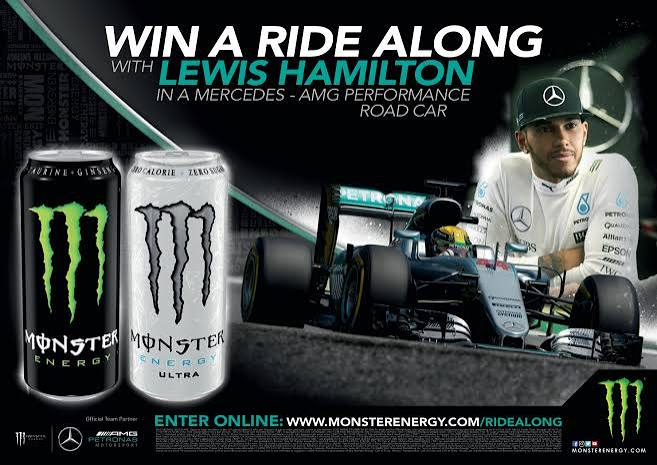

lewis hamilton monster is more than a search phrase attached to an energy drink. It represents a moment when Formula 1 celebrity, personal branding and beverage culture collided in a remarkably visible way. In 2017, Monster Energy announced a global partnership with Lewis Hamilton, then a three-time Formula 1 world champion, creating a relationship that extended beyond conventional motorsport sponsorship.
The result was Monster Energy 44, a signature drink built around the number Hamilton had carried throughout his racing career. Its story is therefore not simply about caffeine or flavor. Instead, it illustrates how modern athletes increasingly become creative collaborators, designers and cultural brands in their own right.
The Number 44 Became the Heart of the Collaboration
Hamilton’s racing identity has long been closely associated with 44. Monster used that recognition as the foundation for its signature product, naming the drink “44” after the number Hamilton had raced with since the beginning of his career. The company described the product as a joint collaboration, with Hamilton involved in its creation and presentation.
That choice mattered because the number transformed an otherwise ordinary can into something connected to a recognizable sporting personality. Consequently, fans were not simply seeing another energy drink on a shelf. They were seeing a small piece of Formula 1 symbolism translated into a consumer product.
Who Is Lewis Hamilton?
| Detail | Description |
|---|---|
| Name | Lewis Hamilton |
| Profession | Formula 1 racing driver |
| Racing number | 44 |
| Major achievement | Seven-time Formula 1 World Champion |
| Monster collaboration | Signature Monster Energy 44 |
| Wider influence | Motorsport, fashion, music, design and popular culture |
Hamilton’s significance extends well beyond his achievements behind the wheel. Over the course of his career, he has developed a distinctive public identity encompassing fashion, music, design and celebrity culture. That broad cultural presence helped make a partnership such as Lewis Hamilton Monster considerably more interesting than a conventional sports endorsement.
How the 44 Drink Came to Life
The original Lewis Hamilton Monster was introduced in Europe in 2017. Monster described the drink as light, crisp and refreshing, while its packaging incorporated visual elements inspired by Hamilton’s racing helmet and championship achievements.
Moreover, Hamilton was not presented merely as the face of an existing product. Monster’s own interview with the driver explained that he participated in the flavor-development process, discussing the kinds of drinks and flavors he personally preferred before tasting different options.
That distinction helped give the collaboration an element of authorship. The drink was marketed as something connected to Hamilton rather than simply something advertised by him.
Why Lewis Hamilton Monster Stood Out on the Shelf
Energy drinks have always relied heavily on visual identity. However, the Lewis Hamilton collaboration pushed that idea further by combining the visual language of Monster with the recognizable imagery of Formula 1.
The can became part of the appeal. Its racing-inspired design, prominent 44 branding and connection to Hamilton gave it an identity that could be understood even by consumers who were not deeply familiar with the beverage category. Monster had effectively turned sports memorabilia into everyday packaging.
Furthermore, this approach reflected a wider change in celebrity marketing. Consumers increasingly encounter athletes through products, clothing, social media and entertainment rather than only through competition. The can therefore occupied an unusual space between beverage, merchandise and fan culture.
From Motorsport Sponsorship to Personal Partnership
Monster already had a relationship with Mercedes-AMG Petronas Motorsport, but the Hamilton partnership was deliberately described as separate from the team’s sponsorship. That distinction is important because it shows how athlete branding had become valuable independently of team affiliation.
In other words, Monster was not simply borrowing the visibility of Formula 1. It was building a relationship with Hamilton himself.
That strategy also gave the partnership greater flexibility. Hamilton could participate in product development, promotional material and lifestyle-oriented storytelling while Monster could connect its brand with his personality outside the racing circuit.
The Zero-Sugar Era Changed the Story
The collaboration evolved again in 2022 when Monster and Coca-Cola Europacific Partners introduced a Lewis Hamilton zero-sugar variant. The new version featured a peach-nectarine flavor, zero sugar and zero calories, while Hamilton collaborated with artist Mad Dog Jones on the can design.
This evolution reflected changing consumer expectations around energy drinks. The category had increasingly embraced reduced-sugar and zero-sugar alternatives, and the Hamilton partnership adapted accordingly.
Interestingly, the design process again emphasized creativity rather than simply celebrity placement. Hamilton’s involvement with the visual concept helped maintain the idea that the product belonged to a larger personal brand ecosystem.
What the Drink Says About Modern Athlete Branding
The deeper significance of Lewis Hamilton Monster lies in what it tells us about celebrity culture.
Historically, athletes often endorsed products created entirely by companies. Today, however, the relationship is frequently more collaborative. Athletes can influence flavors, packaging, campaigns and even the cultural meaning surrounding a product.
Hamilton was particularly well suited to this model. His image has consistently crossed boundaries between motorsport and broader lifestyle culture. Therefore, a branded energy drink could function as another expression of the Hamilton identity rather than simply an advertisement.
At the same time, the partnership demonstrated the commercial power of Formula 1’s increasingly global audience. A driver’s identity could travel from the circuit to supermarkets, convenience stores and collectors’ shelves.
Why Fans Remember the Original 44
For many consumers, the Lewis Hamilton Monster became memorable partly because it felt like a product from a particular period of Formula 1 history.
The original 44 can belonged to the era when Hamilton was firmly established as one of the sport’s defining stars. Its appearance consequently became associated with a specific chapter of his career and with Monster’s aggressive motorsport-oriented marketing.
That nostalgia is visible in online fan communities, where collectors and former consumers continue discussing the original flavor and its disappearance. Recent discussions among Monster enthusiasts show that some fans still distinguish strongly between the original Lewis Hamilton version and later replacements or renamed products.
The reaction illustrates an important cultural phenomenon: once a mass-market product becomes tied to memory, it can acquire emotional value that exceeds its original commercial purpose.
A Drink, a Driver and a Moment in Time
The story also reveals why limited or changing collaborations can become culturally interesting. A product does not have to last forever to become memorable.
In fact, scarcity can strengthen nostalgia. When consumers can no longer casually find an old product, the can they once ignored on a supermarket shelf can suddenly feel like an artifact.
That is particularly true with Lewis Hamilton Monster because the product was connected to a recognizable phase of Hamilton’s career. The drink effectively captured a moment when his racing identity, Monster’s motorsport culture and the wider growth of Formula 1 fandom were intersecting.
What Happened to the Lewis Hamilton Monster Brand?
The partnership eventually changed, and the Lewis Hamilton-branded versions were subsequently replaced or renamed in some markets. For example, Coca-Cola’s current product information describes a stone-fruit Monster product as formerly being known as Monster Energy Drink Lewis Hamilton Zero Sugar.
The transition demonstrates how closely sports branding can be tied to professional relationships. When an athlete’s commercial associations change, packaging and product identities can change with them.
For fans, however, commercial discontinuation does not necessarily mean cultural disappearance. The original can can continue to live through photographs, collections, memories and conversations among enthusiasts.
The Cultural Legacy of Lewis Hamilton Monster
Ultimately, Lewis Hamilton Monster is an intriguing example of how contemporary sports marketing works. It combined a world-famous driver, an instantly recognizable racing number and an established energy-drink identity into one consumer object.
More importantly, it demonstrated that athlete collaborations can be about participation rather than simple endorsement. Hamilton’s involvement in flavor development and design gave the product a more personal narrative, while Monster’s motorsport heritage supplied the cultural setting.
The drink therefore sits at the intersection of sport, commerce and identity. It was sold as an energy beverage, but its appeal was also connected to the mythology of speed, competition and a driver whose number had become part of his public identity.
Conclusion: When a Racing Number Became a Cultural Memory
Lewis Hamilton Monster ultimately tells a larger story than the history of one energy drink. It shows how modern sports figures can transform personal symbols into commercial identities and how everyday products can become extensions of celebrity culture.
The number 44 gave the collaboration an immediate point of recognition. Monster provided the global beverage platform, while Hamilton brought the personality and sporting history. Together, they created something that could exist simultaneously as a drink, a piece of motorsport branding and, eventually, a nostalgic reminder of a particular Formula 1 era.
That may be the most interesting legacy of Lewis Hamilton Monster. The product was designed to represent speed and performance, yet its lasting appeal has increasingly become about memory: remembering a driver, a racing era, a distinctive can and the moment when Formula 1 culture could be carried home from the circuit in the palm of a hand.
A useful next step: if you’re publishing this as an SEO guest post, the strongest companion piece would be a short article comparing the original 44, the zero-sugar version, and the later replacement branding.