RitFit: the name sits at the intersection of a changing fitness culture, where the gym is no longer necessarily a commercial room filled with machines, mirrors, and crowded weight racks. Instead, strength training is increasingly moving into spare bedrooms, garages, basements, and carefully planned corners of everyday homes. Founded in 2015, RitFit began with accessible fitness products and has since expanded into power racks, Smith machines, benches, weights, cable systems, and multifunctional home-gym packages.
The Idea Behind RitFit
The philosophy behind RitFit is reflected in its name, which the company says combines “Right” and “Fitness.” Rather than presenting exercise as a single prescribed lifestyle, the brand emphasizes giving people equipment that can adapt to their routines, available space, and individual goals. That idea matters because modern fitness is increasingly personal. For some, training means serious strength work; for others, it means building consistency after a long workday. Consequently, equipment becomes part of a broader lifestyle rather than simply another purchase.
From Simple Equipment to Complete Home Gyms
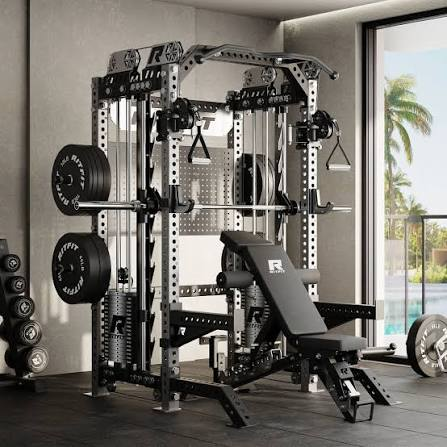
RitFit’s development mirrors the evolution of the home-fitness market itself. Its early range included products such as resistance bands, dumbbells, kettlebells, benches, and other practical equipment. Later, the company moved toward heavier strength-training systems, introducing power racks and attachments before expanding into Smith machines and multifunctional equipment. By 2023 and 2024, its portfolio had grown to include products such as the BLP01 leg press, hack squat and calf-raise system, as well as the M1 Multi-Functional Smith Machine.
That progression is significant. A dumbbell can begin a workout journey, but a multifunctional rack can eventually become the structural center of an entire training environment. Therefore, RitFit’s product evolution reflects a consumer desire for equipment that performs several jobs without requiring a commercial-sized space.
Why Home Gyms Feel Different Now
The popularity of home fitness is not simply about convenience. It also reflects a cultural shift in how people understand personal time. Going to a gym requires leaving home, arranging transportation, working around opening hours, and sharing equipment. A home gym removes many of those small barriers.
At the same time, however, home training asks something different from the individual: commitment. There is no crowded room creating social pressure and no commute separating intention from action. The equipment waits quietly in the same space every day. In that sense, brands such as RitFit participate in a larger movement toward fitness as a self-directed habit rather than a scheduled destination.
The Appeal of Multifunctional Equipment
One of the strongest themes in RitFit’s current range is multifunctionality. Its catalog includes Smith machines, power cages, cable systems, leg-training machines, benches, weights, and complete packages designed to combine several training functions.
This approach responds to a practical problem: space. Most home users cannot dedicate an entire commercial gym to exercise. Instead, they need equipment capable of doing more than one job. A single system that supports squats, presses, cable exercises, and accessory movements can therefore make a limited room considerably more useful. Ultimately, the appeal is less about owning more equipment and more about making each piece work harder.
RitFit and the Democratization of Strength Training
Strength training has historically carried an image of specialized spaces and experienced athletes. However, the growth of home equipment has gradually changed that perception. Adjustable benches, racks, cable attachments, and modular systems allow beginners to start modestly while giving experienced lifters room to progress.
RitFit’s own history reflects this progression. The company says it originally identified a need for beginner-friendly, reasonably priced equipment before moving toward more advanced strength-training systems. Its current collections span products aimed at different levels, from basic accessories and benches to sophisticated Smith-machine packages.
That range is culturally important because accessibility is not only about price. It is also about confidence. Equipment that feels understandable, adaptable, and appropriate to someone’s space can make the first step into strength training feel less intimidating.
A Home Gym as a Personal Space
There is also an emotional dimension to the home-gym trend. A home training area can become a physical reminder of personal goals. A barbell may represent discipline; a bench may become part of a morning routine; a power rack may mark the transition from casual exercise to serious training.
RitFit’s emphasis on making fitness fit individual lifestyles speaks directly to this phenomenon. Its current brand messaging focuses on allowing people to build training spaces around their goals, schedules, and homes.
Consequently, the modern home gym is rarely just a collection of metal and rubber. It can become a personal environment where progress is measured privately, imperfectly, and repeatedly.
RitFit’s Product Evolution at a Glance
| Period | Development | Why It Matters |
|---|---|---|
| 2015 | Early home-fitness products | Established an accessible entry point |
| 2018 | Introduction of the PPC01 squat rack | Marked a stronger move into strength training |
| 2020 | Lat-pulldown attachment development | Added versatility to home setups |
| 2022 | Cable crossover and Smith-system expansion | Broadened multifunctional training |
| 2023–2024 | Advanced machines and Smith systems | Positioned the brand deeper within serious home strength training |
| 2025 | Community initiatives and showroom development | Expanded the brand beyond equipment into experience and inclusion |
The company’s published history shows a steady movement from individual fitness products toward complete training ecosystems.
Beyond Equipment: The Question of Inclusion
Fitness culture can sometimes create an unintended hierarchy: the strongest athletes receive the most attention while beginners, older adults, and people with disabilities can feel peripheral. RitFit has increasingly tried to address that gap through its “We All Fit” initiative, which the company describes as a program supporting people with disabilities through access to home-gym equipment. It has also highlighted its sponsorship of triathlete Kendra Herber and other inclusion-focused efforts.
Whether such initiatives ultimately reshape the wider fitness industry remains a larger question. Nevertheless, the direction is meaningful. Equipment brands increasingly understand that the future of fitness cannot be defined solely by elite performance. It must also include ordinary people trying to make movement part of their lives.
What Makes RitFit Relevant to Modern Consumers?
The answer is partly versatility, but it is also timing. Consumers have become more comfortable buying substantial fitness equipment for their homes, while manufacturers have become better at designing systems that combine multiple exercises in relatively compact footprints.
RitFit sits within that intersection. Its present catalog includes complete home-gym packages, Smith machines, power cages, benches, weights, storage solutions, accessories, and specialized strength machines.
At the same time, buyers should still approach any major equipment purchase practically. Dimensions, ceiling height, flooring, assembly requirements, weight capacity, available attachments, and the user’s actual training goals all matter. A sophisticated machine is valuable only when it suits the person and the space around it.
The Human Side of Building a Home Gym
Perhaps the most interesting part of the home-gym movement is what happens after the equipment arrives. The first workout can be awkward. The first few weeks can feel inconsistent. Progress may be invisible for a while.
Yet routines develop through repetition. A person learns where to store plates, when to train, which movements feel strongest, and how much recovery they need. Gradually, the equipment stops looking like an expensive collection of objects and becomes part of daily life.
That is where RitFit’s broader proposition becomes more interesting. The real product is not simply a rack or Smith machine. It is the possibility of creating an environment where fitness can become habitual.
A Different Definition of Fitness
The fitness industry has spent decades selling transformation: stronger bodies, faster times, lower numbers, bigger muscles. Those goals remain important, but the home-fitness movement introduces another definition of success—consistency.
For a busy parent, success might mean thirty uninterrupted minutes before the household wakes up. For a remote worker, it might mean training between meetings. For a beginner, it may simply mean returning to the rack three times a week.
RitFit’s development reflects that broader understanding. Its stated ambition is to make home fitness simple, strong, and effective, while its product range increasingly allows users to customize the experience around their circumstances.
The Future of the Home-Gym Culture
The next phase of home fitness will likely be less about simply owning equipment and more about creating complete experiences. Consumers increasingly want versatility, efficient use of space, clear guidance, and equipment that can grow with them.
RitFit’s expansion into modular systems, complete packages, advanced strength machines, and in-person experiences suggests how brands are responding to that expectation. The company announced plans for a showroom in Chino Hills, California, designed to let visitors test equipment and receive guidance based on goals, space, and budget.
That development points toward an interesting future: the home gym may be private, but the process of choosing and understanding it is becoming increasingly experiential.
Conclusion: Strength That Fits Real Life
RitFit represents more than another name in the crowded fitness-equipment market. Its trajectory reflects a deeper change in how people approach exercise. The gym is becoming less of a fixed destination and more of a flexible part of domestic life.
Ultimately, the lasting appeal of RitFit lies in that flexibility. Its equipment can occupy a garage, a dedicated training room, or a carefully organized corner of a home. More importantly, it can support different definitions of progress.
The future of fitness may not belong exclusively to enormous commercial gyms or elite training centers. Instead, it may increasingly belong to ordinary spaces transformed by ordinary people who decide that strength, movement, and health deserve a place in everyday life. In that sense, the most important thing a home-gym brand can provide is not simply machinery. It is a framework for making fitness fit.