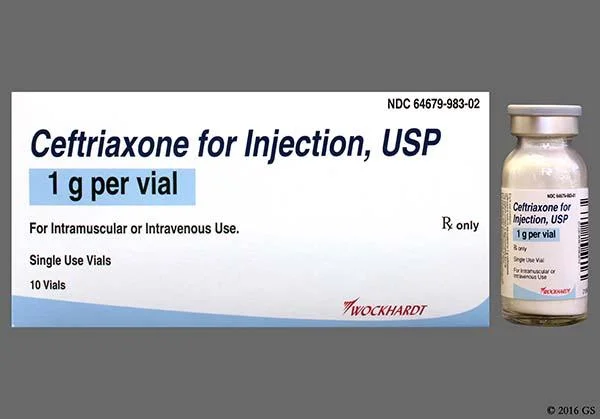

how long does 1 shot of rocephin last is a question that often appears after a patient leaves a clinic with a single antibiotic injection and little sense of what happens next. Rocephin, the brand name for ceftriaxone, is a long-acting cephalosporin antibiotic used to treat a range of bacterial infections. Unlike some antibiotics that require several doses throughout the day, ceftriaxone can maintain useful concentrations in the body for many hours. However, the length of time one injection remains in the body is not the same as the length of time an infection needs treatment.
Why One Rocephin Injection Can Work for Many Hours
Ceftriaxone is designed to remain in the bloodstream considerably longer than many commonly used antibiotics. In healthy adults, its reported elimination half-life generally ranges from about 5.8 to 8.7 hours. In practical terms, that means the amount of active drug in the bloodstream decreases gradually rather than disappearing shortly after an injection.
Importantly, a half-life does not mean the medicine stops working after that number of hours. Instead, it describes how long it takes for the concentration of the drug in the body to fall by approximately half. Therefore, ceftriaxone can continue to be present and active after one half-life has passed. This pharmacological feature is one reason healthcare professionals can sometimes administer it once daily.
How Long Does 1 Shot of Rocephin Last in the Body?
For many adults, a single injection of ceftriaxone can produce measurable drug concentrations for roughly a day or longer, although the exact pattern depends on the dose, route of administration, individual metabolism, and the infection being treated. Official prescribing information shows measurable ceftriaxone concentrations after single doses at later time points, including 24 hours after administration.
That does not mean every patient receives protection from infection for exactly 24 hours. Rather, it illustrates why ceftriaxone is considered a relatively long-acting antibiotic. In some circumstances, physicians prescribe it once every 24 hours; in others, treatment may involve a different schedule or additional antibiotics.
The Difference Between Drug Duration and Treatment Duration
One of the most important distinctions is between how long the medicine remains in the body and how long the infection requires treatment. A patient may feel better after a single injection, yet the underlying bacterial infection may not have been completely eliminated.
The official Rocephin prescribing information notes that treatment commonly continues for several days depending on the infection, with usual treatment durations listed as 4 to 14 days and longer courses sometimes needed for complicated infections. It also advises continuing therapy for at least two days after signs and symptoms have disappeared in relevant treatment situations.
Consequently, how long does 1 shot of rocephin last should not be interpreted as how long the infection is cured.
What Happens After an Intramuscular Shot?
When ceftriaxone is administered into a muscle, the drug is gradually absorbed into the bloodstream. This differs from intravenous administration, where the medication enters the circulation directly.
Official pharmacokinetic data demonstrate that ceftriaxone remains measurable following intramuscular administration. For example, after a single 0.5-gram intramuscular dose, measurable plasma concentrations were still reported at 24 hours in the cited data.
The gradual absorption and relatively slow elimination help explain why a patient may not need another injection immediately. Nevertheless, dosing should always follow the schedule selected by the prescribing clinician rather than being based on how the patient feels.
Why Some People May Need More Than One Dose
The appropriate number of doses depends heavily on what is being treated. A relatively straightforward bacterial infection may require a different regimen from pneumonia, meningitis, bloodstream infection, abdominal infection, or another serious condition.
Moreover, bacteria differ in their susceptibility to antibiotics. The dose also matters. Patient age, body size, kidney function, liver function, severity of illness, and the location of infection can influence treatment decisions.
Therefore, the fact that ceftriaxone can remain in the body for many hours does not make one injection universally sufficient.
What the Half-Life Really Tells Us
The term half-life can sound more definitive than it actually is. If a drug has a half-life of approximately 6 to 9 hours, the quantity in the bloodstream falls progressively over successive half-lives rather than suddenly switching off.
For healthy adults, ceftriaxone’s elimination half-life is reported at approximately 5.8 to 8.7 hours. However, different patient populations can have longer half-lives. For example, official labeling reports longer elimination times in some people with severe renal impairment and in certain other populations.
As a result, there is no universal clock that tells every patient exactly when one injection has completely left the body.
A Closer Look at Dose and Route
| Factor | Why it matters |
|---|---|
| Dose | Higher doses can produce higher concentrations and may be selected for more serious infections. |
| IM injection | The medicine is absorbed gradually through muscle tissue. |
| IV administration | The drug enters the bloodstream directly and reaches high concentrations quickly. |
| Infection type | Different bacterial infections require different treatment strategies. |
| Patient factors | Age and kidney or liver problems can influence drug handling. |
The prescribing information includes pharmacokinetic measurements for several ceftriaxone doses and routes, illustrating that concentration changes over time rather than following a simple “on/off” pattern.
Why Feeling Better Does Not Mean the Antibiotic Is Finished
For patients, one of the most confusing parts of antibiotic treatment is the difference between symptom relief and bacterial eradication. Fever may fall, pain may ease, or fatigue may improve before the infection has been fully controlled.
That is why healthcare professionals generally determine the treatment course rather than asking patients to judge when an antibiotic has “worn off.” Stopping, delaying, or repeating injections without medical advice can lead to inadequate treatment or unnecessary antibiotic exposure.
In other words, how long does 1 shot of rocephin last is useful pharmacological information, but it should never be used as a personal dosing schedule.
Can One Shot Keep Working Overnight?
In many circumstances, yes. Ceftriaxone’s pharmacological profile allows concentrations to remain measurable well beyond the first several hours after administration. This is particularly relevant to regimens in which doses are spaced approximately 24 hours apart.
However, “still present” and “strong enough for every infection” are not interchangeable concepts. The required antibiotic concentration can depend on the organism, infection site, and clinical circumstances.
Therefore, a patient should not assume that a single morning injection automatically provides sufficient treatment until the following day unless that schedule was specifically prescribed.
When the Body Clears Ceftriaxone More Slowly
The body does not process medicines identically in every person. Ceftriaxone is eliminated through both urinary and biliary pathways, and official labeling reports that its pharmacokinetics can differ in people with significant renal impairment, including some patients undergoing hemodialysis.
Older adults and people with certain medical conditions may also have different pharmacokinetic profiles. Consequently, the question of how long does 1 shot of rocephin last has a population-level answer, but the precise duration for an individual patient can vary.
This is one reason medication decisions should be personalized rather than based solely on general internet timelines.
What Patients Should Watch For After the Injection
After receiving ceftriaxone, patients should follow the instructions given by their healthcare professional and monitor how the illness progresses. A lack of improvement, worsening symptoms, or new concerning symptoms deserves medical attention.
Severe allergic reactions are uncommon but potentially serious. Difficulty breathing, swelling of the face or throat, fainting, or a rapidly developing severe rash requires urgent medical evaluation.
Likewise, persistent or worsening infection symptoms should not automatically be interpreted as evidence that the injection has simply “worn off.” The underlying infection may require reassessment, a different treatment approach, or additional testing.
The Larger Story Behind a “One-Shot” Antibiotic
There is something culturally appealing about the idea of a one-shot treatment. In a busy healthcare environment, an injection can feel decisive: one visit, one dose, and perhaps the problem is over.
Yet antibiotics rarely work in such a simple narrative. Ceftriaxone’s relatively long duration illustrates the sophistication of modern pharmacology, but it also demonstrates why treatment cannot be reduced to a stopwatch. The medicine’s persistence is only one part of the story; the type of infection, bacterial susceptibility, dosage, and patient’s health all matter.
That distinction becomes particularly important when people search how long does 1 shot of rocephin last because they are hoping to know whether another dose is necessary. The safest answer is that duration should be determined by the prescribed treatment plan, not by symptoms alone.
Frequently Asked Questions
How long does 1 shot of rocephin last?
Ceftriaxone remains in the body for many hours, with a typical adult elimination half-life of approximately 5.8 to 8.7 hours. Measurable concentrations can persist for around 24 hours or longer, depending on circumstances.
Does one Rocephin shot cure an infection?
Not necessarily. Some infections may be treated with a single dose, while others require repeated doses or a longer course. The appropriate regimen depends on the specific infection and clinical circumstances.
Why can Rocephin sometimes be given once daily?
Its relatively long elimination half-life allows ceftriaxone concentrations to remain in the body for an extended period, supporting dosing schedules that may be spaced about 24 hours apart in appropriate clinical situations.
Can I get another shot if I still feel sick?
Do not automatically repeat ceftriaxone because symptoms remain. Contact the clinician who prescribed it. Persistent symptoms can mean that the infection needs more treatment, but they can also indicate another diagnosis or complication.
Does the dose affect how long ceftriaxone remains in the body?
Dose influences drug concentrations, while elimination is also affected by individual patient factors. Official data show ceftriaxone pharmacokinetic measurements across doses ranging from 0.15 to 3 grams.
Conclusion: A Long-Acting Antibiotic, Not a Universal One-Day Cure
The answer to how long does 1 shot of rocephin last is more nuanced than a single number. Ceftriaxone is a relatively long-acting antibiotic, and its elimination half-life in healthy adults is generally around 5.8 to 8.7 hours, with measurable concentrations continuing beyond that period.
Still, the presence of medicine in the bloodstream does not tell the whole story. One injection may be enough for certain indications, while other infections require multiple doses over several days. Ultimately, the most meaningful measure of treatment is not simply how long the shot remains in the body, but whether the prescribed regimen adequately treats the specific bacterial infection.
For anyone wondering how long does 1 shot of rocephin last after leaving a clinic, the practical lesson is straightforward: ceftriaxone can work for many hours, but the exact treatment duration belongs to the medical plan—not the clock.